
Is Your Blog Losing Traffic? It Might Be Content Decay

Versha Trivedi
Aug 13, 2025
- What Is Content Decay?
- Why Does Content Decay Happen?
- How to Recognize Content Decay
- How to Fix Decayed Content
What Is Content Decay?
Content decay refers to the gradual decline in a webpage’s effectiveness over time—typically reflected in drops in organic traffic, search rankings, click-through rates, and conversions—even if the content hasn’t changed
It’s not about big crashes or algorithm penalties; it’s a slow drift that can fly under the radar until performance noticeably dips.
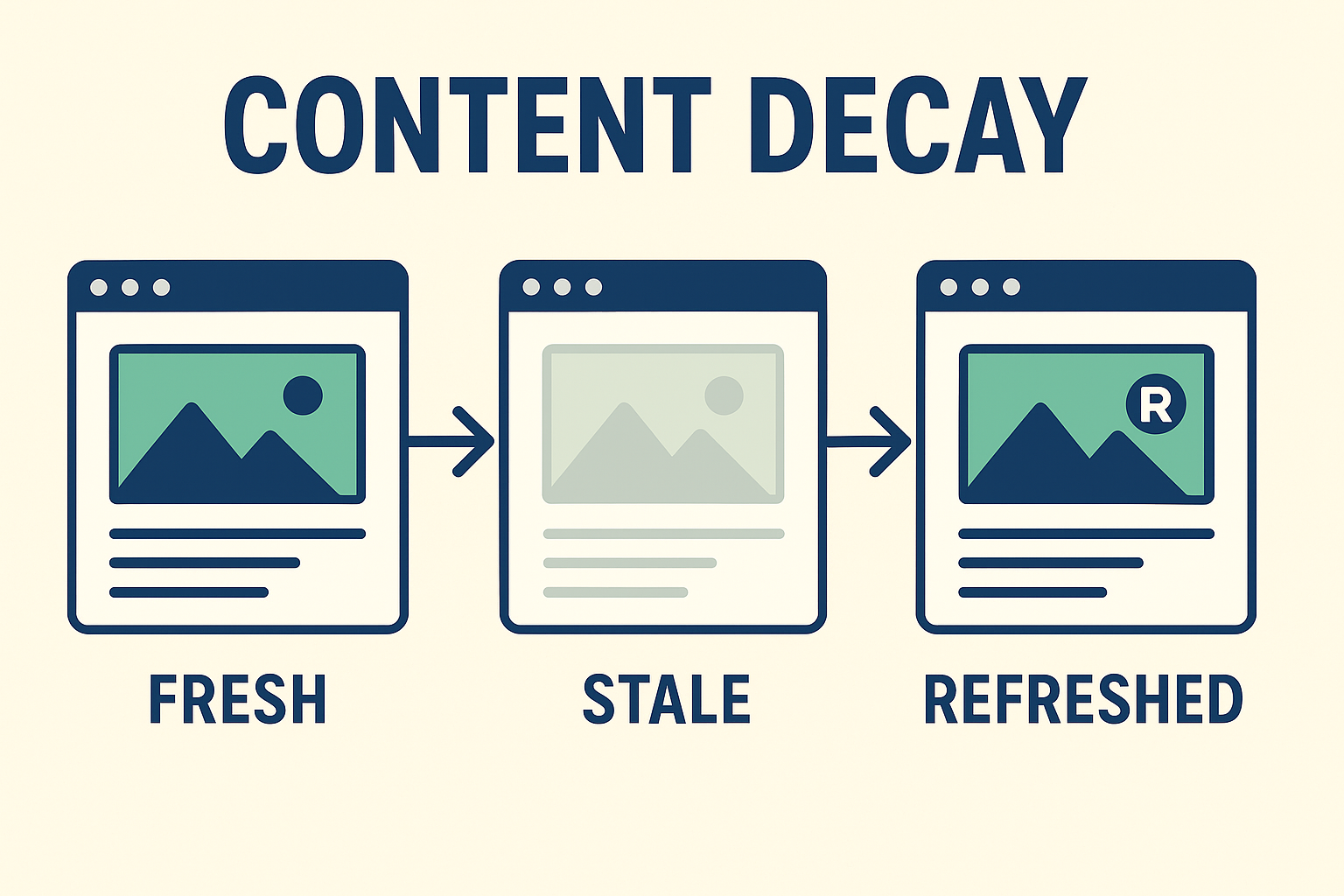
Think of your content like fresh fruit in a store.When you first publish it, it’s fresh, appealing, and people ‘buy’ it (click, read, share).
But over time, it becomes stale — newer, fresher options appear, people’s tastes change, and fewer customers pick it up.
That slow drop in interest and traffic is called content decay.
“To fix it, you ‘refresh’ the fruit(Content)— update the info, make it more appealing, and put it back in front of customers”.
Why Does Content Decay Happen?
Multiple factors contribute:
Outdated Information: As facts, tools, or stats become old, your content loses relevance.
Shifts in Search Intent: What users are looking for may change—e.g., from “what is…” to “best…” content—making older content misaligned.
New, Better Content from Competitors: Fresher, more comprehensive, or richer content can outrank yours.
Algorithm Updates & SERP Changes: Search engines favor fresh, high-quality content or new features (like snippets, video carousels), reducing visibility for older pages.
Keyword Cannibalization: Multiple pages on your site targeting the same terms can compete and dilute each other’s visibility.
Declining Interest or Relevance: Some topics simply become less searched or fall out of favor over time.
How to Recognize Content Decay
Keep an eye out for:
Steady Drops in Metrics: Look at traffic, rankings, impressions, or conversions that are declining gradually.
Reduced Engagement: Higher bounce rates or shorter time on page indicate waning interest.
Search Console or SEO Tools Alerts: Tools like Google Search Console, Ubersuggest, SEMrush, etc., can flag pages with decreasing performance.
How to Fix Decayed Content
Here’s what you can do:
Update the Content: Refresh facts, data, and references to keep your content timely and relevant.
Enhance It: Add visuals, FAQs, tables of contents, videos, or interactive elements to increase value and engagement.
Repurpose or Re-optimize: Turn blog posts into infographics or videos, or rewrite them completely if needed.
Prune or Consolidate: Remove or merge underperforming pages, particularly if they are competing against each other.
Reassess Keyword Strategy: Check for intent shifts or internal competition and adjust focus accordingly.
Conduct Regular Audits: Schedule periodic reviews—quarterly or bi-annually—to catch decay early.
TL;DR Summary
Content decay is when your old content loses traffic and rankings over time. Fix it by updating, improving, or repurposing your content with regular monitoring, you can revive decayed content and reclaim its performance.
Versha Trivedi
I'm Versha Trivedi, a digital marketing consultant from Lucknow, India. I'm passionate about blogging and helping businesses enhance their online presence. With expertise in digital marketing strategies, I assist clients in reaching their target audience and achieving their goals. Through my blog, I share valuable insights and practical tips on topics such as digital marketing trends and content creation. Let's connect and explore the exciting possibilities that digital marketing and blogging offer for your success.